

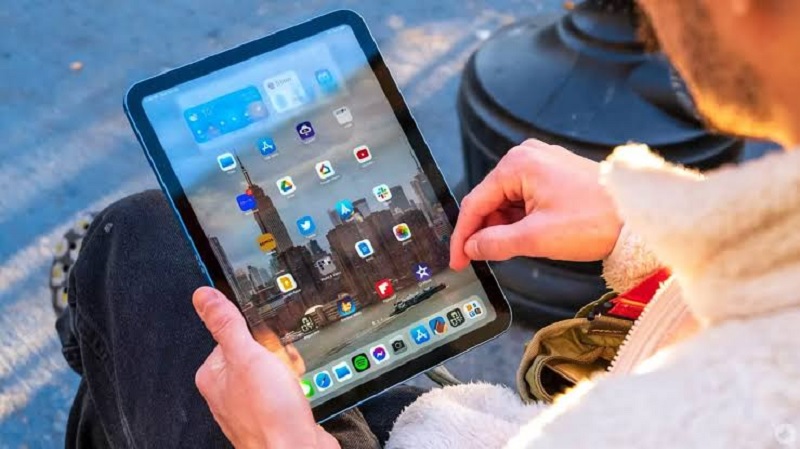
Walk the floor of any major UK trade show and you’ll notice something: barely any of the tablets on stand after stand were bought outright. They were hired for the week, configured for the job, and will be back in a warehouse before the following Monday. That’s not a cost-cutting afterthought — it’s become a deliberate operational choice. iPad rental has quietly become one of the most practical tools in the UK events and retail toolkit, letting organisations deploy exactly the number of devices they need, exactly when they need them, without the capital outlay or the long tail of managing a fleet they’ll barely use again.
For anyone running exhibitions, conferences, retail activations, staff training or field research, the appeal is obvious once you look past the upfront hire fee. Ownership brings depreciation, storage, software updates and eventual disposal. Hire brings none of that. What follows is a look at where this makes the most sense, and what the practicalities actually involve.
The Business Case for iPad Rental Over Ownership
Buying tablets makes sense when a device will be used daily, by the same person, for years. Most business use cases for iPads don’t look like that at all. They look like a three-day exhibition, a single conference registration desk, or a six-week retail campaign — short, defined windows of intense use followed by long periods of nothing.
That mismatch is exactly why so many organisations now turn to hiring tablets instead of buying them outright. A hired device is:
- Available in whatever quantity the job demands, from a handful to several hundred
- Current-generation hardware, without the organisation carrying the depreciation
- Covered for loss, damage and technical faults for the hire period
- Returned the moment the job ends, with no storage or resale problem left behind
There’s also a cash flow argument that’s easy to underrate. A finance team approving a hire cost against a specific event budget has a much easier conversation than one being asked to sign off a capital purchase of forty tablets that might get used twice a year. For agencies and event companies working across multiple clients, this flexibility is arguably the bigger win — the same batch of hired devices can be provisioned differently for each brief, then handed back rather than sitting in a cupboard between jobs.
Trade Shows and Exhibitions: Where Short-Term Hire Makes Sense
The UK exhibition calendar is relentless. Spring brings a wave of sector-specific shows; autumn brings another, heavier one running through to the pre-Christmas retail and hospitality peak. Exhibitors rarely attend the same show twice in a row with the same stand requirements, and that unpredictability is precisely where short-term hire earns its keep.
On a stand, tablets do several jobs at once: lead capture, interactive product catalogues, video demos, visitor sign-in, and sometimes gamified activations designed to pull footfall in from the aisle. None of that requires devices the exhibitor keeps forever — it requires devices that work flawlessly for the two or three days that matter.
That’s also where the operational reality of exhibition halls bites. Loading bays run on tight schedules, breakdown is often the same evening as the last visitor leaves, and there’s rarely anywhere secure to store equipment onsite between build and show days. Hired kit sidesteps most of that: it arrives configured and ready, and it goes straight back out the door at teardown rather than needing to be packed, insured and transported home by the exhibiting team.
A few things exhibitors typically ask for at this stage:
- Uniform casing or branded skins across every unit on the stand
- Charging cradles or lockable stands to stop devices walking off
- Pre-loaded apps or content so nothing needs configuring on the show floor
Conferences, Registration and Check-In
Delegate registration is one of the least glamorous parts of running a conference and one of the easiest to get wrong. Long queues at the entrance set the tone for the whole event, and paper sign-in sheets simply don’t scale once you’re past a few hundred attendees.
Tablet-based check-in — QR code scanning, badge printing triggers, real-time attendance tracking — has become the default for mid-to-large UK conferences. It’s faster, it gives organisers live numbers, and it feeds straight into whatever CRM or lead system is running behind the scenes. None of that requires owned hardware; it requires enough devices, correctly configured, for the specific date on the calendar.
Kiosk Mode and Locking Devices for Public Use
Any tablet placed in front of the public, whether at a registration desk or on an exhibition stand, needs to do one thing and nothing else. That’s what kiosk mode is for: locking the device to a single app, disabling the home button function, and preventing a bored delegate from wandering into settings, opening a browser, or — worse — buying something.
For rented fleets, this configuration is usually handled before the devices ever arrive onsite, alongside device management profiles that let the whole batch be updated, monitored or remotely wiped if a unit goes missing. That last point matters more than it might seem. A locked-down, trackable device that’s misplaced at a three-day show is an inconvenience. An unmanaged one carrying event data is a genuine risk.
Retail Point of Sale and Digital Signage
Retail and hospitality have leaned into tablets for POS and digital signage for years now, and pop-up retail has made hire particularly relevant. A brand running a six-week Christmas pop-up, a seasonal market stall, or a limited-run in-store activation doesn’t want to be holding tablet stock in January it has no further use for.
Common retail and hospitality applications include:
- Mobile point-of-sale for pop-up shops, markets and pay-at-table hospitality
- Digital signage and interactive product lookup on the shop floor
- Click-and-collect or queue management systems for peak trading periods
- Customer feedback and loyalty sign-up stations near the till point
The seasonal nature of UK retail — Christmas trading, January sales, spring and summer pop-ups — lines up naturally with hire terms rather than ownership. A retailer can scale device numbers up for its busiest six weeks of the year and scale back down immediately afterwards, rather than sizing its permanent tablet fleet around its single busiest fortnight.
Product Demos, Staff Training and Market Research on the Go
Beyond events and shop floors, there’s a steady stream of business use that’s inherently temporary. Sales teams running a product demo tour need identical, pre-loaded devices for the duration of the tour and no longer. Trainers rolling out a new system across a workforce need enough tablets for the training days themselves, not a permanent addition to IT inventory. Market researchers conducting street or venue surveys need rugged, simple devices for the fieldwork period.
In each case the requirement is the same: a known quantity of tablets, correctly configured, for a defined and often short window. Renting means the organisation can specify exactly what’s needed — screen size, storage, connectivity, particular apps pre-installed — without carrying that configuration burden once the job is done. For training rollouts especially, having every device set up identically before day one, rather than IT staff configuring units individually on the morning of the course, is often the difference between a smooth session and a delayed start.
The Logistics of Provisioning and Returning Large Batches
The part that separates a good hire experience from a stressful one is rarely the devices themselves — it’s what happens either side of the event. Provisioning at scale means every unit needs the same apps, the same restrictions, the same network settings and, ideally, the same battery charge on arrival. Doing that manually across fifty or a hundred devices the night before an event is not realistic for most teams.
This is where working with a specialist supplier rather than assembling a fleet independently pays off. A well-run provisioning process typically covers:
- Bulk configuration and app installation before devices leave the warehouse
- Asset tagging so every unit can be tracked, especially across multi-day or multi-venue events
- Charging and transport cases sized for the batch, not improvised on the day
- A clear returns process, so a hundred devices used across three exhibition halls come back accounted for rather than trickling in over a fortnight
That last point is underrated. Anyone who has tried to reconcile borrowed or purchased kit after a large event knows how quickly a handful of “missing” units becomes an administrative headache. A structured hire agreement, with devices logged out and logged back in as a batch, removes that problem almost entirely — and it means the organisation walks away from the event with nothing left to store, sell, or write off.
Sustainability and Why Fewer Idle Devices Is a Genuine Advantage
There’s a resource argument for hiring that sits alongside the financial one, and it’s worth taking seriously rather than treating as a marketing afterthought. Every tablet manufactured carries an environmental cost in materials, energy and eventual disposal. A device bought for a single three-day exhibition and then left in a drawer for the following eleven months represents a poor return on that cost, however you look at it.
A well-run rental fleet works the opposite way. The same batch of tablets that served one exhibitor’s stand in March can be wiped, reconfigured and deployed for a completely different conference in April, and again for a retail activation in May. Keeping devices in continuous, productive use across many businesses rather than idle in one business’s storage cupboard is simply a better outcome — and increasingly, it’s one that procurement teams are being asked to account for as part of their own sustainability reporting.
For organisations weighing up a large batch purchase against a hire agreement, this is worth factoring in alongside the more obvious cost and flexibility arguments. Fewer devices manufactured overall, each one used more intensively across its working life, is a genuinely better outcome than every business owning its own rarely-used stack of tablets.
Conclusion
The pattern across all of this is consistent. Wherever the requirement is short, specific and unlikely to repeat in exactly the same shape, hiring tablets makes more operational sense than owning them. Trade shows, conferences, retail pop-ups, training rollouts and field research all share the same underlying shape: a defined burst of need, a fixed batch of devices, and a clean end point where everything goes back.
What’s changed in recent years isn’t the concept of hiring equipment — that’s hardly new — but how well the process now fits around business use. Provisioning, kiosk locking and device management have matured to the point where a hired fleet can be as controlled and predictable as an owned one, without any of the long-term overhead. For UK organisations juggling an unpredictable calendar of events, campaigns and training needs, that combination of flexibility and control is difficult to argue with. Ownership still has its place for daily, ongoing use — but for the short, sharp bursts of activity that define so much of business life, hiring has become the more sensible default.
